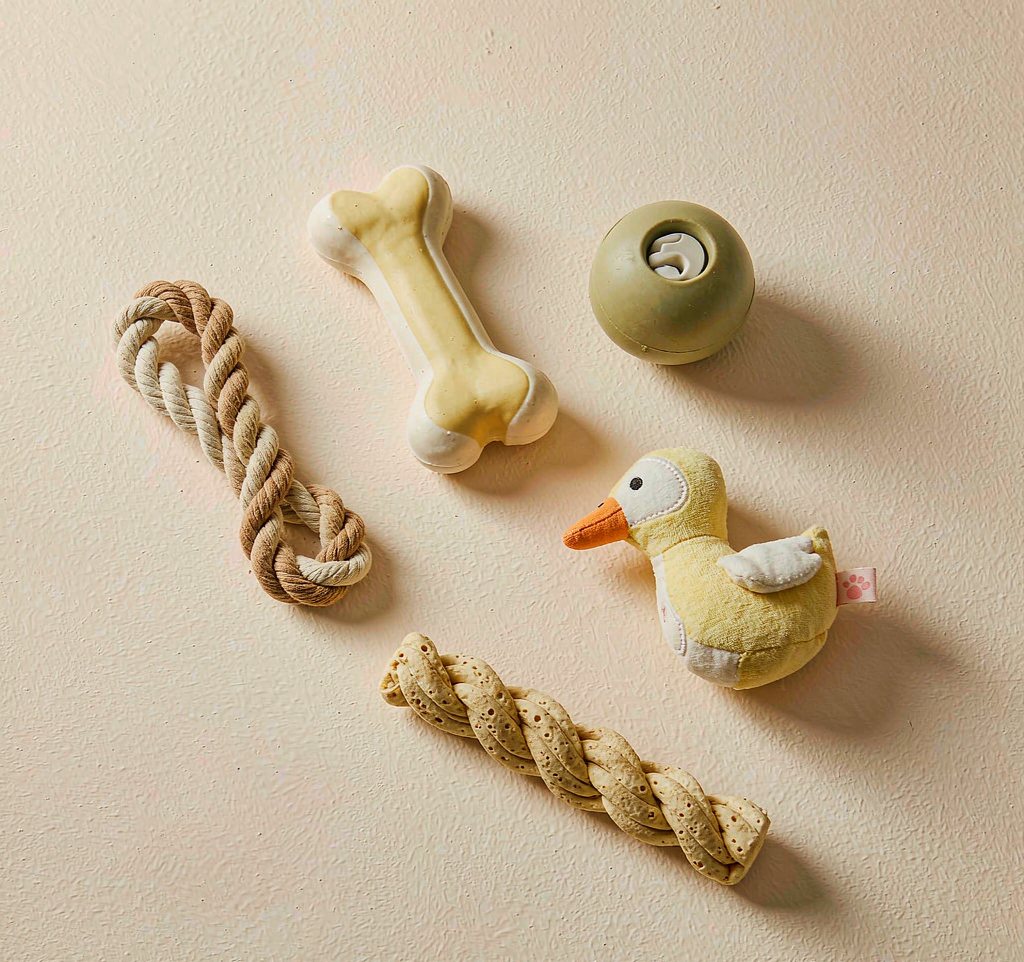
作者: cyrus

  • Pet toy compliance: what EN 71 and CPSIA actually require

    Pet toy compliance: what EN 71 and CPSIA actually require

    Pet toys are not children’s toys, but many retailers treat them that way — and increasingly, EU market surveillance does too. Understanding which standards apply keeps shipments moving.

    EN 71 in the EU

    EN 71 applies to toys “designed or intended for play by children under 14”. A pet toy is not legally a toy under the Toy Safety Directive, but retailers routinely require EN 71 evidence because the same product may be bought for a child, or because their own compliance team applies a stricter internal rule.

    In practice, the parts that matter:

    • EN 71-1 — mechanical and physical properties: no sharp edges, no small parts that detach under tension
    • EN 71-2 — flammability of plush and fabric components
    • EN 71-3 — migration of 19 heavy elements from coatings, dyes and rubber

    CPSIA in the United States

    CPSIA applies to children’s products, and again pet toys fall outside the definition. However, the CPSIA third-party testing framework is the benchmark US retailers use for pet products, particularly for:

    • Total lead content — 100 ppm in accessible substrates
    • Phthalates — 8 restricted phthalates in plasticised components
    • Sharp point and small parts testing (16 CFR 1500)

    What we test by default

    MaterialEUUS
    TPR / rubberEN 71-3, REACH SVHC, PAHsCPSIA lead, phthalates
    Plush / fabricEN 71-1, EN 71-2, azo dyesCPSIA lead, flammability
    Ceramic / glazeLFGB, EN 71-3FDA 21 CFR 175.300
    Stainless steelLFGB, food contactFDA food contact

    Documentation to ask for

    Ask for reports that name the exact material and colour used in your product, are less than 12 months old, and come from a lab accredited to ISO/IEC 17025. Reports that name a different colour batch are the single most common gap we see at pre-shipment.

    A practical rule

    If a product will sit on a shelf next to children’s products, test it to children’s product standards. It costs a few hundred euros per material and removes the most expensive kind of retail dispute.

  • From artwork to container: how OEM pet products actually get made

    From artwork to container: how OEM pet products actually get made

    Most first-time buyers underestimate the middle of the process. The brief is easy and the container is easy; the 45 days between them is where programmes succeed or slip. Here is how the work actually sequences.

    Days 1–5: brief and feasibility

    We need five things to quote properly: target price, target quantity per size, material preference, packaging format and market (because compliance follows market). Without a target price we can design something beautiful that will never make it to shelf.

    Days 6–12: sampling

    Two samples usually run in parallel — one in stock materials for speed, one in the specified material for accuracy. Buyers approve on the second sample. Expect 7–10 days for a sewn product, 12–15 days if a new mould is involved.

    Days 13–20: tooling and artwork

    New moulds for rubber or plastic parts take 18–22 days, so we start tooling in parallel with sample approval rather than afterwards. Artwork goes through a pre-press check for dieline accuracy, barcode placement and market-specific labelling rules.

    Days 21–30: pilot run

    We run 5 % of the order quantity as a pilot. It surfaces the problems that samples hide: fabric shrinkage across a full roll, colour drift between dye lots, and packaging line speed. The pilot is also when the QC checklist is frozen.

    Days 31–40: bulk production with QC gates

    Three gates, each with a signed report:

    • Incoming materials — fabric weight, colour fastness, hardware load rating
    • In-line at 30 % — seam strength, dimensions, hardware assembly
    • Pre-shipment AQL 2.5 — full inspection against the frozen checklist

    Days 41–45: documentation and loading

    Test reports, packing lists, and where required, a third-party inspection. Containers load at Ningbo or Shanghai, with a loading photo set sent the same day.

    Where programmes usually slip

    In our experience, delay rarely comes from production. It comes from late artwork approval, a compliance requirement discovered after tooling, or a colour standard agreed verbally rather than in Pantone numbers.

  • How to choose a pet bed supplier: 7 checks before you place a PO

    How to choose a pet bed supplier: 7 checks before you place a PO

    Most pet bed programmes fail for reasons that have nothing to do with design. They fail on foam density, carton volume or a supplier who cannot repeat the sample. Before you sign a purchase order, run these seven checks.

    1. Ask for the foam density in numbers

    “High density” means nothing. Ask for the grade in D — 25D, 35D or 45D — and ask how it is tested. A 45D memory foam bed should hold its loft after 30,000 compression cycles; a 25D bed will flatten within a season and come back as a return.

    2. Check cover construction, not just the fabric

    Two suppliers can quote the same 600D Oxford and deliver very different products. Ask about:

    • Seam type — twin-needle seams last far longer than single stitching
    • Zip quality — a hidden YKK zip is worth the small cost difference
    • Wash testing — the cover should survive at least 40 washes at 30 °C without pilling

    3. Understand compression and container maths

    An uncompressed 80×65 cm bed takes roughly 0.34 cbm per carton of four. Vacuum-rolled, the same carton drops to about 0.19 cbm. On a 68 cbm container that difference decides whether you ship 800 beds or 1,400.

    4. Confirm the audit chain

    BSCI and SEDEX are the baseline for EU and UK retail. Ask for the report ID and the expiry date — not a PDF cover page. If the factory cannot produce a current report, plan for a third-party inspection on the first order.

    5. Price the sample, not just the unit

    A stock sample that ships in five days tells you little about the supplier’s ability to build your product. Ask for a custom-labelled sample and time it. A factory that takes three weeks for a labelled sample will take three weeks longer on every repeat order.

    6. Test the change-request conversation

    Send one change after the sample — a different Pantone, a wider size — and watch the response. Suppliers who answer with a cost and a date are suppliers who will handle your next season.

    7. Get the test reports before the deposit

    REACH SVHC, CPSIA and EN 71 reports should be current and specific to the materials in your product. Generic reports for a different fabric are the most common documentation problem we see in first orders.

    A supplier who cannot repeat a sample cannot repeat a season. Test the repeat before you scale.

    What this looks like in practice

    For our own bed line we publish the density grade, the seam construction, the carton volume and the test reports per SKU. It makes the buying conversation shorter, and it means a reorder arrives the same as the first shipment.